Application of aerodynamic features from high-speed aircraft to enhance Savonius wind turbine performance
Author affiliations
DOI:
https://doi.org/10.15625/0866-7136/23737Keywords:
Savonius wind turbine, CFD, vertical axis wind turbine, tip speed ratioAbstract
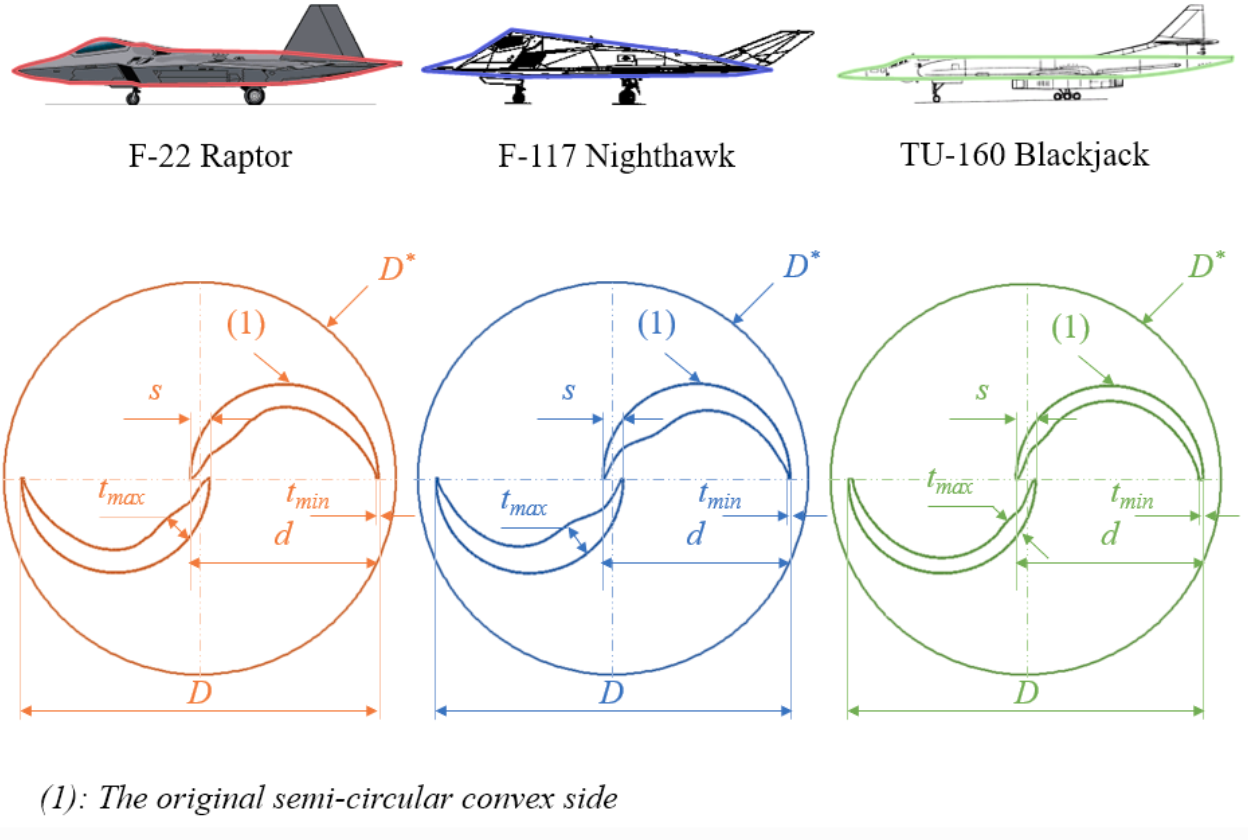
As part of the global transition to sustainable energy, wind power has emerged as a promising alternative, widely adopted in Vietnam and beyond. In recent years, the Savonius wind turbine, a vertical-axis design, has offered advantages such as omnidirectional wind capture and simple structure but suffers from low aerodynamic efficiency, limiting its broader application. Inspired by the principles of aerodynamic efficiency observed in modern high-speed aircraft, such as the F-22, F-117 and TU-160, this study explores blade modifications incorporating fuselage geometry features to enhance performance. A series of computational fluid dynamics (CFD) simulations were conducted to investigate the influence of these new blade designs on the turbine’s power coefficient (CP). The results indicate that the proposed modifications can enhance CP values by up to 13.3% compared to the conventional Savonius design, particularly at higher tip speed ratios (λ > 0.8). This improvement paves the way for the practical application of Savonius wind turbines in urban wind energy harvesting, where compact and efficient designs are essential.
Downloads
Downloads
Published
How to Cite
License

This work is licensed under a Creative Commons Attribution-ShareAlike 4.0 International License.




Funding data
-
National Foundation for Science and Technology Development
Grant numbers 107.03-2023.05